
A lemon pudding cake does something a plain lemon cake doesn’t: it splits into two layers while it bakes. The top sets into a light cake, and the bottom settles into a soft, spoonable lemon pudding, with nothing to frost or sauce afterward. This sugar-free lemon pudding cake gets that separation from a deliberately thin batter, whipped egg whites, and a water bath, and it bakes in six individual ramekins rather than one large dish.
Start to finish it takes about 69 minutes: 20 minutes of prep, 28 to 34 minutes in the oven, and a 15-minute rest so the pudding layer finishes setting. Each ramekin lands near 110 calories with about 4g net carbs, 8g protein, and 5g fat.
Why You’ll Love This Recipe
- Two layers from one bowl: a tender cake layer on top and a creamy lemon pudding underneath, separated by the bake itself.
- Six single servings: six 6-ounce ceramic ramekins mean nothing has to be sliced or cut after baking.
- About 4g net carbs and 8g protein per serving: almond flour, whey isolate, and Greek yogurt carry the structure, so the batter is built without wheat flour. To check the numbers on an ingredient yourself, look them up in USDA FoodData Central.
- One spoon to finish: a light cream cheese and yogurt topping goes on while the cakes are still warm, so it settles into the surface.
If you want bright lemon flavor in a baked cake that chills instead of separating, the sugar-free lemon poke cake bakes first and then pours a lemon gel into holes poked almost to the base. For a lemon dessert that skips the water bath altogether, the sugar-free lemon cream cheesecake pairs fresh lemon with an almond crust and a whipped topping, at 4g net carbs per slice.
Ingredient Notes
For the lemon pudding cake
Finely ground almond flour, whey isolate, and oat fiber give the cake layer its structure. Use finely ground almond flour for a tender crumb, and pick a whey isolate without added sugar or flavoring. Oat fiber is not oat flour, and the two should not be swapped here.
The eggs are what separate the layers. The yolks go into the batter and hold it together, while the whites are beaten with the second portion of allulose and folded in gently. That foam rises into the cake layer, and the looser liquid underneath is what turns into pudding.
Greek yogurt and almond milk keep the batter thin. Both go in with the yolks, lemon juice, and zest. There is no point in adding more flour or letting the batter sit and thicken, because a thin batter is exactly what lets the two layers separate during the bake.
Lemon juice and zest do different jobs. The ¼ cup of fresh juice is what makes the pudding layer taste like lemon, and the tablespoon of finely grated zest carries the aroma through the cake. Zest the lemons before you juice them so none of it ends up in the pulp.
Allulose is used twice, and the split matters. 50g goes into the dry mixture with the almond flour, and the remaining 30g goes in gradually while the whites beat. Measure both amounts rather than eyeballing where you split them.
If you want to know why allulose behaves the way it does in a bake like this one, my guide to sugar-free sweeteners for baking compares it with the other options and covers the taste and texture differences in bakes.
For the cream finish
Softened cream cheese is what makes the cream finish work. Take it out of the fridge ahead of time. Cream cheese straight from the cold beats up lumpy, and the powdered allulose needs soft cream cheese to disappear into rather than sit as grit.
Stir the yogurt in gradually. Thick plain 0% Greek yogurt goes in a little at a time once the cream cheese is smooth, which keeps the finish light and spreadable instead of stiff. The ½ teaspoon of lemon zest is optional, and it is the easiest place to turn the lemon up.
If you would rather have a lemon dessert you can slice, the sugar-free lemon ricotta tart bakes a creamy citrus filling over an almond-flour lattice crust.
How to Make Sugar-Free Lemon Pudding Cake
1. Prep the oven and the ramekins
Heat the oven to 325°F. Grease six 6-ounce ceramic ramekins and set them in a 9×13-inch roasting pan.
2. Whisk the dry ingredients
Whisk together the almond flour, whey isolate, oat fiber, baking powder, a pinch of fine salt, and 50g of the granulated allulose.
3. Whisk the yolk mixture
Whisk the egg yolks, plain 0% Greek yogurt, unsweetened almond milk, lemon juice, and lemon zest until smooth. Gradually whisk in the dry mixture, then stop while the batter is still thin. It should pour more than it ribbon, and a thicker batter bakes as one dense cake with no pudding layer underneath.
4. Beat the whites with the rest of the allulose
Beat the egg whites until foamy. Gradually add the remaining 30g of allulose and keep beating to soft, glossy peaks. Peaks that stand upright stiffly are past what this batter wants.
5. Fold them together
Fold the whites into the batter in three additions, using a light hand. Small white streaks are fine and disappear in the bake; overmixing is what flattens the cake layer and muddies the pudding layer.
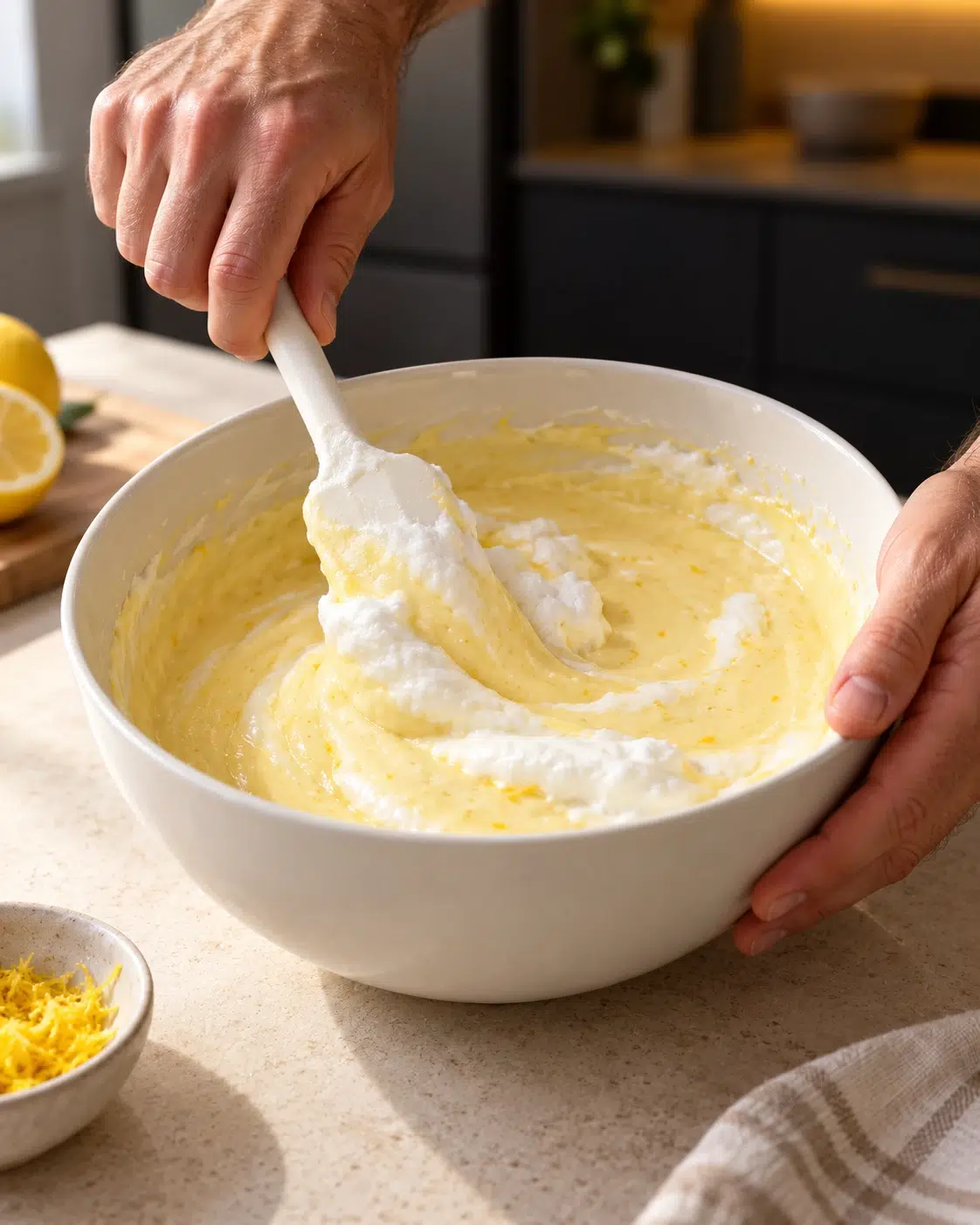
6. Fill the ramekins and set up the water bath
Divide the batter among the ramekins, filling each about two-thirds full. Pour hot water into the roasting pan until it reaches halfway up the sides of the ramekins, then take the whole pan into the oven.
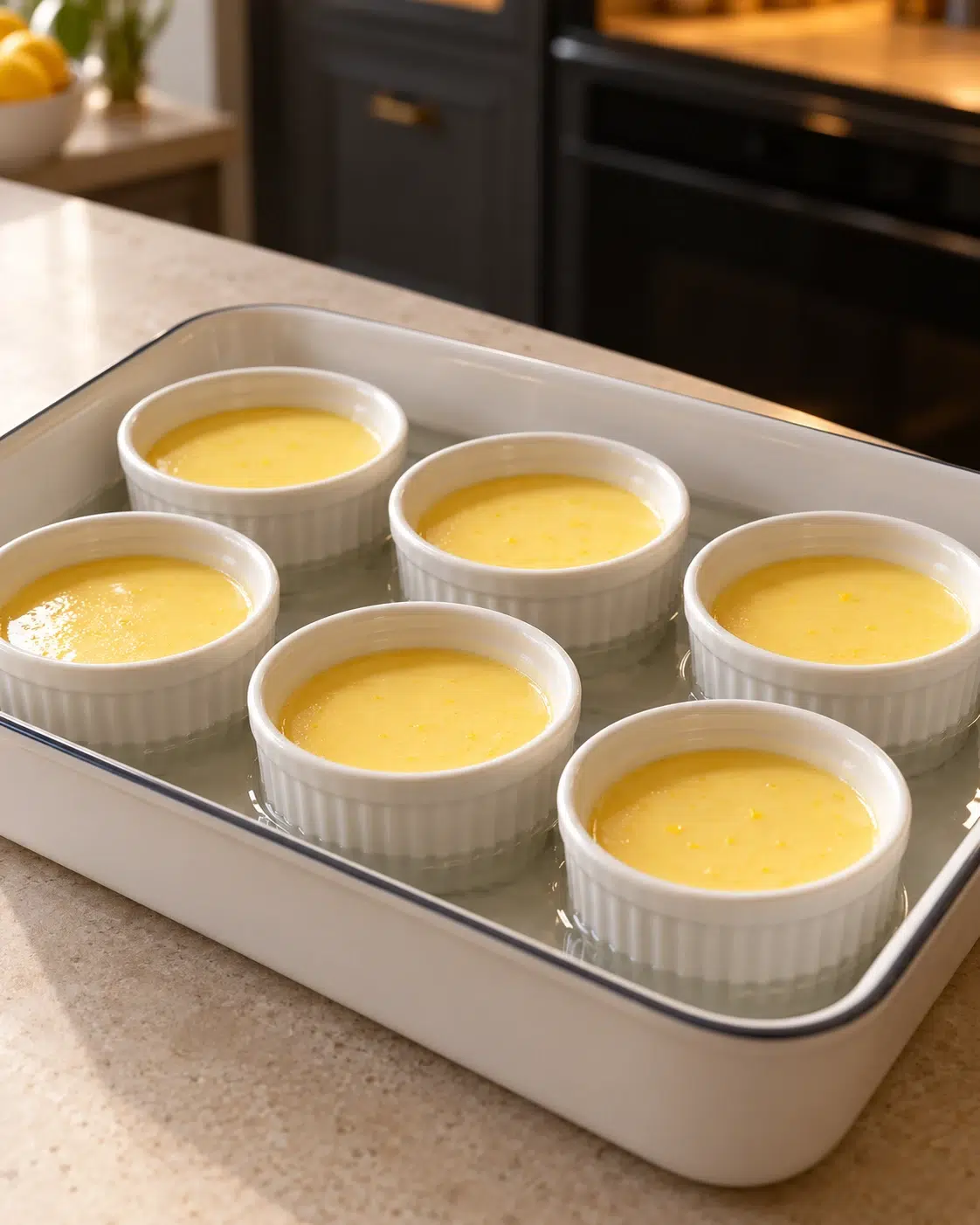
7. Bake
Bake at 325°F for 28–34 minutes, until the tops are puffed and golden and the centers still move slightly when you nudge the pan. Start checking at the 28-minute mark. The pudding layer sets in the hot water below, not in the dry heat above it.
8. Rest, then beat the cream finish
Lift the ramekins out of the water bath and rest them for 15 minutes. While they rest, beat the softened cream cheese with the powdered allulose until smooth, then gradually mix in the thick Greek yogurt and the optional lemon zest.
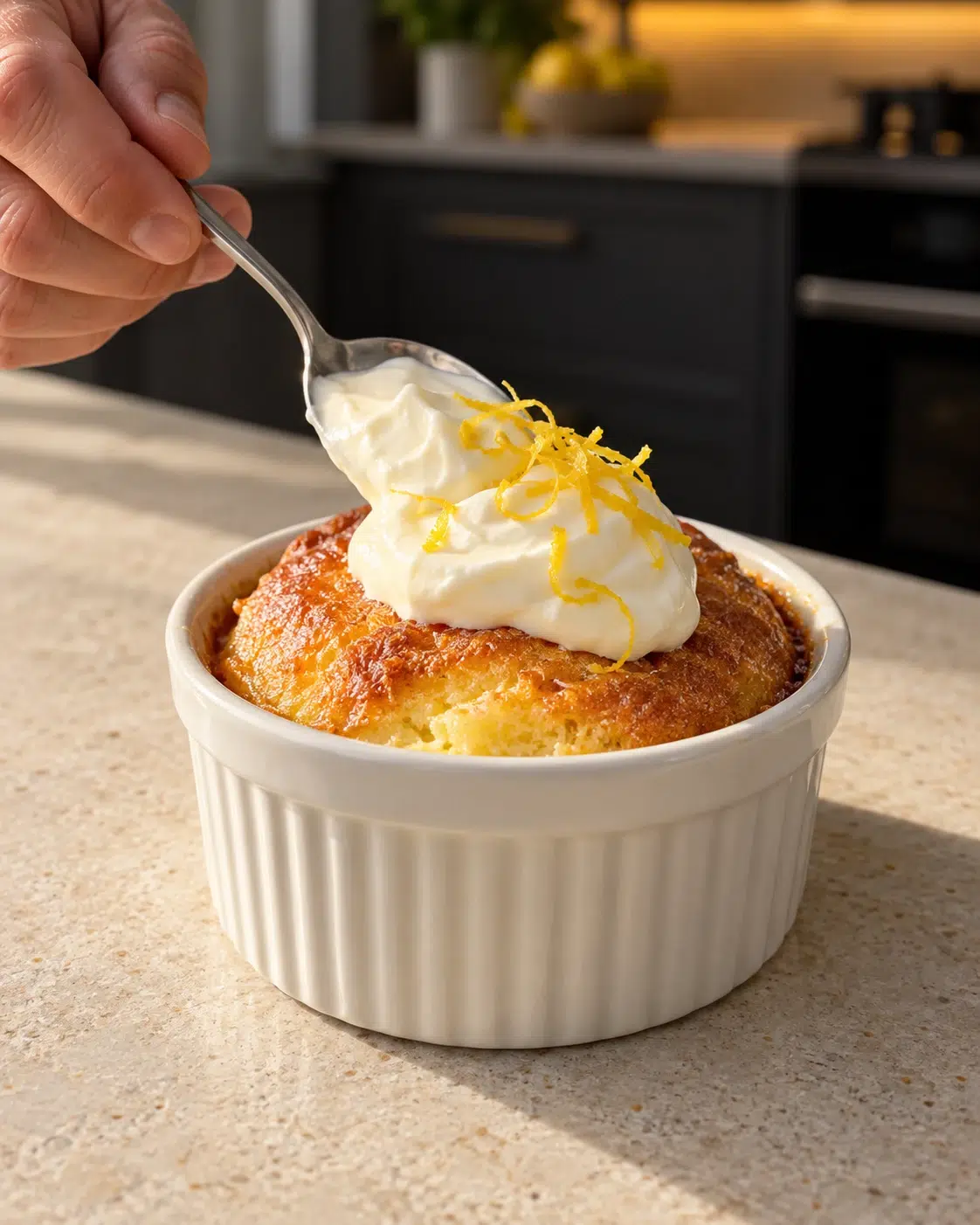
9. Finish and serve
Top each warm pudding cake with one modest spoonful of the cream finish and serve them warm, while the pudding layer is still loose enough to spoon.
Success Tips
- Keep the batter thin. That is the single thing that decides whether these turn into two layers or one dense cake.
- Stop the whites at soft peaks. Stiff peaks sit in the batter as lumps that do not disappear, and they weigh down the cake layer.
- Fold in three additions, gently. Overmixing knocks the air out of the whites, and the separation goes with it.
- Pour the bath water hot. It reaches halfway up the sides of the ramekins, and it needs to be hot when it goes in.
- Do not run past 34 minutes. The centers should still move slightly when the ramekins come out of the oven; longer baking dries the pudding layer out.
- Top them while they are warm. The cream finish settles into the surface when it hits a warm cake.
Storage
Keep these sugar-free lemon pudding cakes covered in the refrigerator. The pudding layer firms as it cools, so let a ramekin sit out for a few minutes before you eat it warm, and store the cream finish in a covered container in the fridge, giving it a stir before you use it. This recipe is written to be baked and eaten the same day, when the pudding layer is at its loosest and creamiest.
Frequently Asked Questions
How do the cake and pudding layers form?
Nothing in the recipe separates them by hand. A thin batter, egg whites folded in gently, and the water bath do it: the foam rises into a cake layer on top while the liquid base underneath sets slowly into pudding. That is why the batter stays loose and the whites stop at soft peaks.
Why is the water bath part of this recipe?
The hot water in the roasting pan cooks the bottom of each ramekin slowly and evenly, and that is what turns the base of the batter into pudding instead of a second cake layer. Keep the water halfway up the sides of the ramekins, and pour it in hot right before the pan goes into the oven.
How do I know when the pudding cakes are done?
Bake 28–34 minutes at 325°F and read the top and the center rather than testing with a skewer. The tops should be puffed and golden while the centers still move slightly. Waiting for a skewer to come out completely clean means the pudding layer has already gone firm and dry.
Why didn’t my layers separate?
Usually one of three things: the batter thickened before it went in the pan, the whites were overbeaten or folded too hard, or the bake ran long. Thin the batter before it goes in, stop the whites at soft peaks, fold in three additions, and pull the ramekins at the 28-minute mark rather than the 34-minute one.
Can I make sugar-free lemon pudding cakes ahead?
Yes. Bake as written, let the ramekins cool in the pan, cover them, and refrigerate. The pudding layer sets as it chills, so give one a few minutes out of the fridge before serving, and keep the cream finish in its own covered container until you are ready to top.
Served warm with a spoonful of cream on top is the whole point of these sugar-free lemon pudding cakes. If you would rather make a lemon dessert ahead of time, the lemon blueberry cheesecake lasagna is a make-ahead chilled dessert with an almond crust and a thick blueberry layer.
Sugar-Free Lemon Pudding Cake Recipe
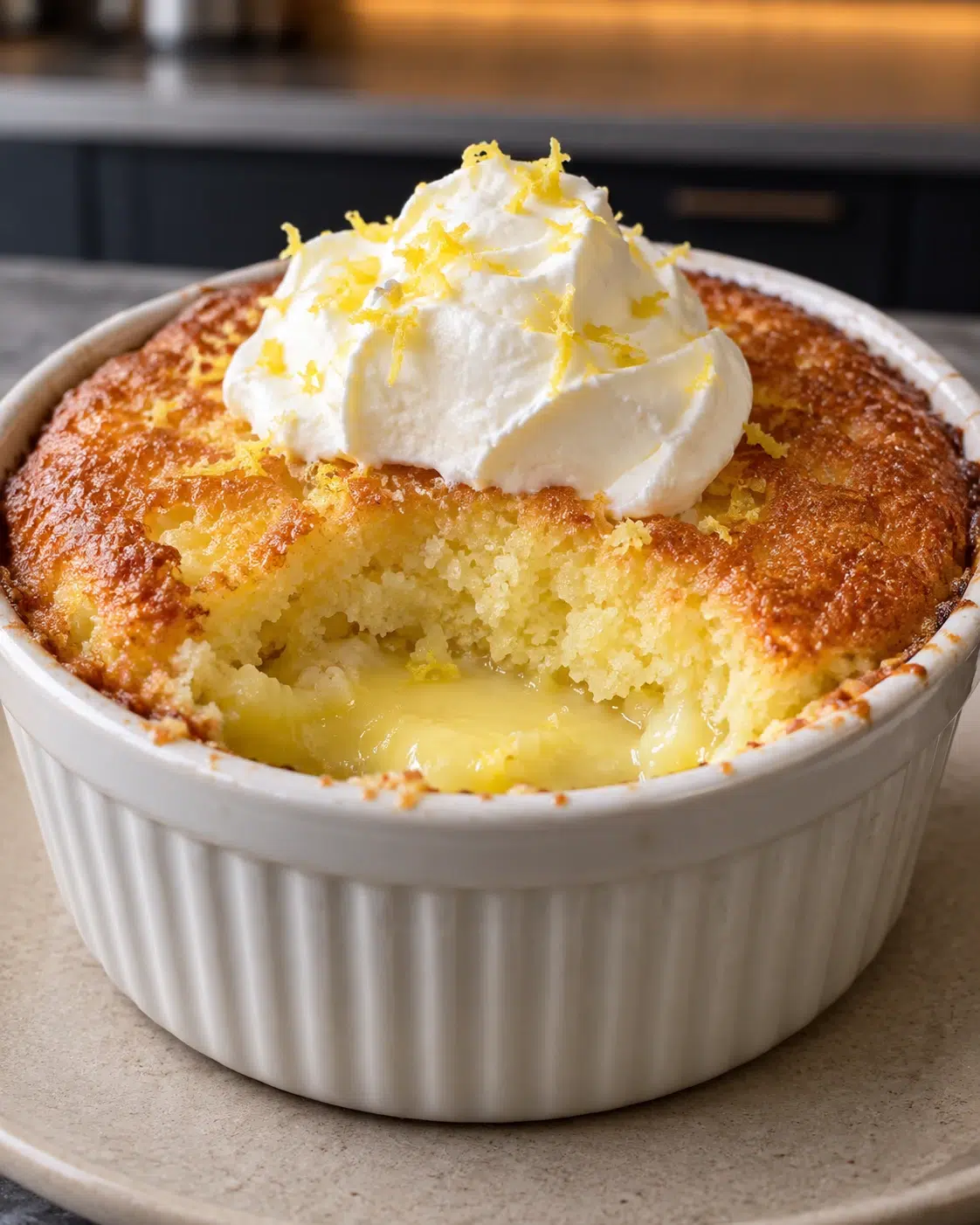
Sugar-Free Lemon Pudding Cake
Ingredients
Equipment
Method
- Heat oven to 325°F. Grease ramekins and place in roasting pan.
- Whisk almond flour, whey, oat fiber, baking powder, salt, and 50g allulose.
- Whisk yolks, yogurt, almond milk, lemon juice, and zest. Gradually whisk in dry mixture; keep batter thin.
- Beat whites until foamy. Gradually add remaining 30g allulose and beat to soft glossy peaks.
- Fold whites gently into batter in 3 additions; small white streaks are fine.
- Divide among ramekins, about two-thirds full. Add hot water halfway up ramekin sides.
- Bake 28–34 min until tops are puffed and golden while centers still move slightly.
- Remove from water bath and rest 15 min.
- Beat cream cheese and powdered allulose smooth; gradually mix in yogurt and optional zest.
- Top each warm pudding cake with one modest spoonful of cream finish.
Notes
- Keep the batter thin so the cake and pudding layers separate.
- Beat the whites only to soft peaks.
- Fold gently; overmixing reduces separation.
- Serve warm for a creamy, spoonable pudding layer.