
Store-bought marshmallow fluff is mostly corn syrup and sugar, and a can of it will undo any sugar-free cookie. So the marshmallow layer in these sugar-free marshmallow sandwich cookies is made from scratch: pasteurized egg whites, gelatin, and powdered allulose whipped to 160°F until glossy.
Underneath it sits a soft chocolate cookie made with almond flour, oat fiber, cocoa, and 0% Greek yogurt, spread with a two-ingredient chocolate hazelnut layer. Sixteen cookies come out of one pan, and they turn into 8 sandwiches. Every one of these sugar-free marshmallow sandwich cookies comes in around 103 calories and 1g net carb.
Everything is done in one session: 30 minutes of prep, 12 to 15 minutes in the oven, and an hour in the refrigerator before they are sliced. If you have ever piped a filling that seized and turned grainy, the thermometer in this method is the part that fixes it.
Why You’ll Love These Sugar-Free Marshmallow Sandwich Cookies
- Real marshmallow cream, made in a saucepan. Egg whites, gelatin, and powdered allulose heated to 160°F and whipped until thick. No corn syrup and no sugar in the filling at all.
- A soft chocolate cookie that bends without breaking. Almond flour, oat fiber, and 0% Greek yogurt keep the rounds tender, so two cookies actually close around the filling instead of cracking. That is the whole trick behind sugar-free marshmallow sandwich cookies.
- Two fillings, two textures. A thin glossy hazelnut layer against the cookie, and a thick white marshmallow cream on top of it, piped in an even spiral so every sandwich looks the same.
- 16 cookies, 8 sandwiches. The dough is shaped into 2-inch rounds about ⅜ inch thick, which is the size that keeps the ratio of cookie to filling right on sugar-free marshmallow sandwich cookies.
- About 1g net carb per sandwich. 103 calories, 6g protein, 8g fat, and 3g fiber per serving, with 4g total carbohydrates.
- Nothing here needs an oven twice. The cookies bake once, the marshmallow is cooked on the stovetop, and assembly happens on the counter. They chill 30 minutes and go straight to serving.
Ingredient Notes
The cookie dough is almond flour, 2½ teaspoons of oat fiber, cocoa, one egg, softened butter, granulated allulose, 0% Greek yogurt, and baking powder. It comes together in a mixer in a single bowl, rests 5 minutes, and chills 15 minutes before shaping. The base is the same idea as my sugar-free chocolate chip cookies, only shaped into the sandwich rounds these sugar-free marshmallow sandwich cookies are built from.
Buy pure oat fiber, not oat flour. Oat fiber is a concentrated, dry fiber that gives the cookies structure, while oat flour behaves like a mild flour and changes the texture. The package is what tells them apart, so check the bag before you measure.
For the marshmallow cream, use pasteurized whipping egg whites. Raw egg whites will not whip to the same volume safely, and pasteurized ones hold a soft, cloud-like peak. Allulose is a rare sugar, and the FDA allows it to be left off the total sugars and added sugars lines on the Nutrition Facts label.
The powdered form of allulose is what dissolves cleanly into warm whites, where the granulated form would grain up and make sugar-free marshmallow sandwich cookies gritty inside the filling. If you can only find granulated, whisk it in early while the whites are still loose and give it the full 4 to 6 minute whip.
One detail decides the filling: the gelatin has to stay fluid when you beat it into the whipped whites. Warm gelatin that has started to set turns sugar-free marshmallow sandwich cookies lumpy in a way that piping cannot fix. The gram weights in the ingredient list are what goes in the bowl, and when a brand is not on the shelf I compare the label with the USDA FoodData Central database.
How to Make These Sugar-Free Marshmallow Sandwich Cookies
There are three jobs here: bake the cookies, cook the marshmallow cream, and assemble. The cookies must cool completely before assembling, and the marshmallow cream is piped straight after it is whipped. Budget 30 minutes of prep for the cookies, then leave another half hour at the end for assembly and the chill.
- Heat oven to 325°F (165°C). Line baking sheet with parchment.
- Whisk almond flour, oat fiber, 16g cocoa, and baking powder.
- Beat softened butter with 35g allulose. Add egg and yogurt.
- Mix in dry ingredients. Rest 5 minutes; chill 15 minutes.
- Shape 16 equal dough portions into 2-inch rounds, about ⅜ inch thick.

- Bake 12–15 minutes until lightly cracked and set. Cool completely.
- Mix hazelnut butter, 6g cocoa, and 5g powdered allulose until smooth.
- Bloom gelatin in cold water for 5 minutes; dissolve gently without boiling.
- Whisk egg whites and 25g allulose over gently simmering water until 160°F (71°C).
- Remove from heat. Whip 4–6 minutes until thick and glossy.
- Slowly beat in fluid gelatin. Transfer immediately to a piping bag.

- Spread hazelnut filling over 8 cookie bases. Pipe marshmallow evenly on top.
- Add remaining cookies, pressing gently. Refrigerate 30 minutes before serving.

Getting the Marshmallow Cream Right
Heating the whites to 160°F (71°C) over a bain-marie is the whole technique, and the thermometer is what makes it repeatable. Too cool and the whites stay loose and grainy; too hot and the cream turns gluey. Hold them at 160°F, take the bowl off the heat, and whip 4 to 6 minutes until the surface holds a glossy ridge.
The gelatin is what makes the filling sliceable rather than melt-away. Bloomed in 20g of cold water, dissolved gently, it joins the warm whites and sets into a soft, sliceable cream. Everything about sugar-free marshmallow sandwich cookies depends on those two temperatures being right, and the rest of the work is just assembly.
For a different filling on the same soft cookie, my chocolate raspberry sandwich cookies use a pale-pink raspberry cream between two cocoa rounds. If you want a chocolate-hazelnut dessert that takes two minutes instead of an hour, my sugar-free chocolate hazelnut mug cake is the same flavor profile with none of the assembly.
Success Tips
- Use pure oat fiber, not oat flour.
- Choose pasteurized egg whites suitable for whipping.
- Keep the gelatin fluid when adding it to the whipped whites, and beat it in slowly so the cream stays glossy in sugar-free marshmallow sandwich cookies.
- Cool the cookies fully before assembling. A warm cookie melts the piped cream and slides the filling out of sugar-free marshmallow sandwich cookies.
- Press the top cookies down gently, just enough to square up the edges without flattening the marshmallow.
- Refrigerate the assembled sandwiches 30 minutes so the filling firms up enough to cut cleanly.
Storage
Keep sugar-free marshmallow sandwich cookies airtight in the refrigerator and eat them within 3 days. The marshmallow cream is made with fresh egg whites, so it belongs in the fridge rather than on a counter.
Airtight matters more here than it does for a plain cookie. The marshmallow layer in sugar-free marshmallow sandwich cookies picks up refrigerator odors quickly, and the soft rounds dry out at the cut edges fast. If you are serving them warm, 20 to 30 minutes out of the fridge is enough to take the chill off without collapsing the filling.
FAQ
Why did my marshmallow cream turn grainy?
It did not get hot enough, or the gelatin was added after the whites had cooled. Whisk the whites over gently simmering water until the thermometer reads 160°F, then whip 4 to 6 minutes off the heat before beating in the fluid gelatin. Grainy cream is the one fault sugar-free marshmallow sandwich cookies cannot hide behind a top cookie.
Can I use store-bought marshmallow fluff instead?
You could, but that is the ingredient this recipe replaces. Commercial fluff is built on corn syrup and sugar, and it will not fit a recipe serving 1g net carb per sandwich. The homemade cream takes about 10 minutes on the stovetop and keeps sugar-free marshmallow sandwich cookies at that number.
How many cookies does this recipe make?
16 cookie rounds, shaped 2 inches across and about ⅜ inch thick, which makes 8 sandwiches with the top cookies. The recipe is written as 8 servings of sugar-free marshmallow sandwich cookies, and every number on the card is for one sandwich.
Can I make the cookies ahead and assemble later?
Yes, and that is the point of this recipe. The recipe is written to be assembled the same day it is baked, once the cookies have cooled completely. After assembly, the sandwiches keep airtight in the refrigerator for up to 3 days. The marshmallow cream is piped the same day it is cooked, because it is a soft fresh-egg-white cream that pipes best straight after the 4 to 6 minute whip.
How do I keep the cookies from cracking when I close the sandwich?
Wait until the cookies are completely cool, keep the rounds at 2 inches, and press gently rather than hard. If the tops crack, the dough was thin or the rounds were over-baked past 15 minutes. For a single-cookie chocolate option instead, my sugar-free cheesecake cookies use a shortbread-leaning dough that holds its shape.
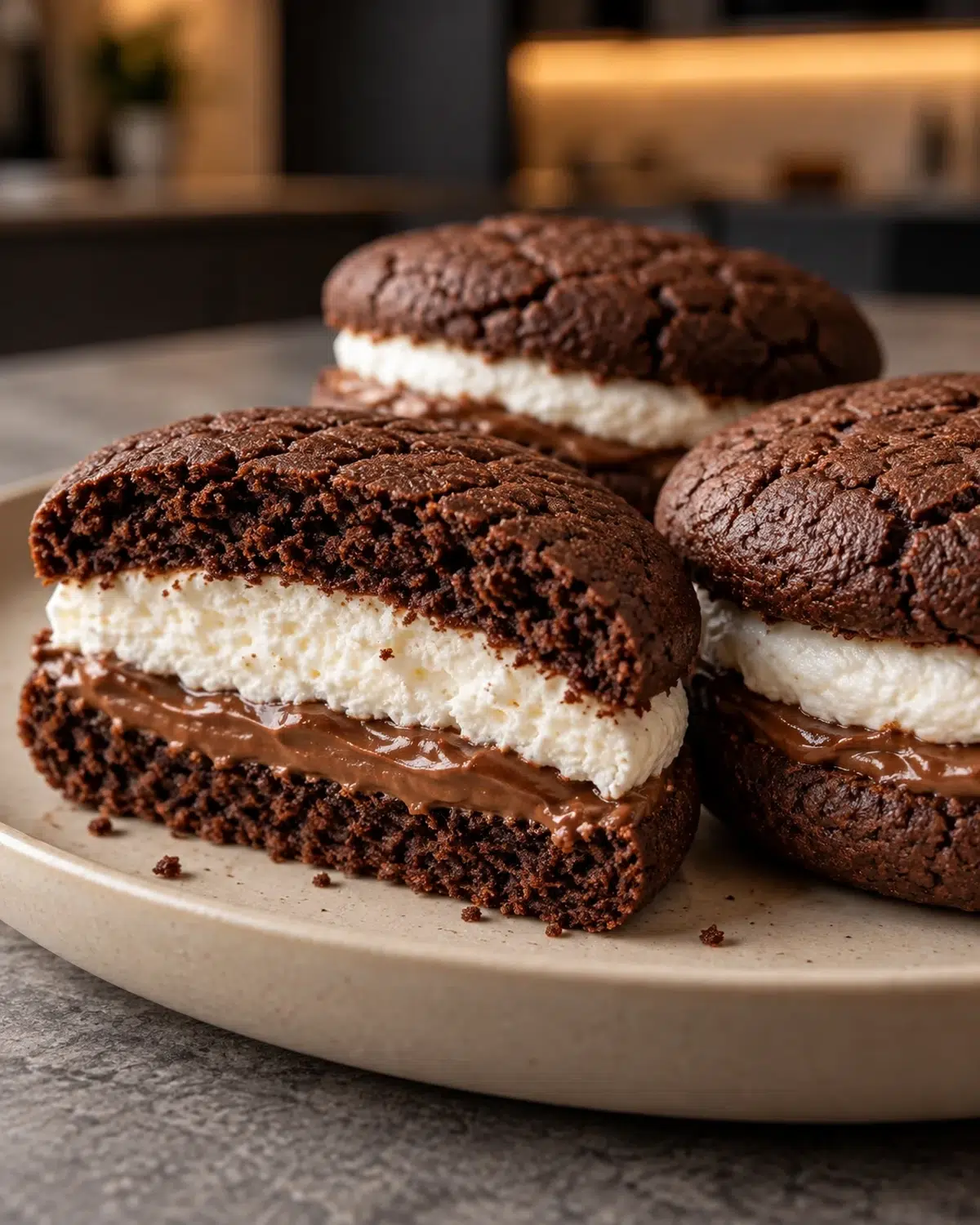
Sugar-Free Marshmallow Sandwich Cookies (Chocolate Hazelnut)
Ingredients
Equipment
Method
- Heat oven to 325°F (165°C). Line baking sheet with parchment.
- Whisk almond flour, oat fiber, 16g cocoa, and baking powder.
- Beat softened butter with 35g allulose. Add egg and yogurt.
- Mix in dry ingredients. Rest 5 minutes; chill 15 minutes.
- Shape 16 equal dough portions into 2-inch rounds, about ⅜ inch thick.
- Bake 12–15 minutes until lightly cracked and set. Cool completely.
- Mix hazelnut butter, 6g cocoa, and 5g powdered allulose until smooth.
- Bloom gelatin in cold water for 5 minutes; dissolve gently without boiling.
- Whisk egg whites and 25g allulose over gently simmering water until 160°F (71°C).
- Remove from heat. Whip 4–6 minutes until thick and glossy.
- Slowly beat in fluid gelatin. Transfer immediately to a piping bag.
- Spread hazelnut filling over 8 cookie bases. Pipe marshmallow evenly on top.
- Add remaining cookies, pressing gently. Refrigerate 30 minutes before serving.
Notes
- Use pure oat fiber, not oat flour.
- Choose pasteurized egg whites suitable for whipping.
- Keep gelatin fluid when adding to whipped whites.
- Cool cookies fully before assembling.
- Refrigerate airtight up to 3 days.