
Sugar-free cheesecake cookies are built around one idea: a tangy cream cheese center wrapped completely inside a thick, soft dough. Two things decide whether that works.
Nothing gets mixed all the way together, and nothing gets overbaked. Miss either one and you get a cracked top or a raw, soupy pocket in the middle.
The dough is the shortbread-leaning kind. Ten tablespoons of butter creamed with allulose, one egg, two and a half cups of finely ground almond flour, and a small measure each of vanilla and salt. That ratio is what lets a cookie spread just enough to look bakery-made without slumping into a thin wafer.
The filling is only 4 ounces of full-fat cream cheese, sweetened with powdered allulose and loosened with a tablespoon of heavy cream so it rolls into small balls. Four ounces is the amount that reads as cheesecake. Push past it and the cookie turns into a cream cheese bomb; pull back and you chase the flavor for nothing.
Prep is 25 minutes, and the filled dough balls chill for 30 minutes before they ever see the oven. Each batch bakes 11 to 13 minutes at 325°F, then needs about 15 minutes on the pan to finish setting. Twelve cookies at roughly 265 calories each, with about 3g net carbs per cookie.
If you would rather have the same cream cheese pairing in a dessert you slice instead of one you bite, the sugar-free lemon cream cheesecake builds cream cheese, allulose, and sour cream into a chilled 12-slice pan. If you want a cookie that needs no dough at all, sugar-free meringue cookies are built entirely from whipped egg whites and powdered allulose.
Why You’ll Love This Recipe
- A real filling, not a swirl. Four ounces of cream cheese per batch gets sealed inside the dough, so every cookie has an actual tangy center.
- Twelve bakery-size cookies. A 3-inch scoop makes these thick enough to feel like a dessert rather than a small-batch cookie.
- Two chills, and both matter. Ten minutes for the filling, then a full 30 minutes for the sealed dough balls before anything reaches the oven.
- Just 3g net carbs each. About 265 calories, 5g protein, and 27g fat per cookie.
- Nothing on top. No glaze, no chips, no sprinkles. The browning comes from the butter, which is all a cheesecake cookie needs.
Ingredient Notes
For the cookie dough
Unsalted butter, softened (10 tbsp, 140g) is creamed with granulated allulose (3/4 cup, 150g) until pale, which is what gives the cookie its shortbread snap and its color. One large egg (50g) and vanilla extract (1 tsp, 4g) go in next, then finely ground almond flour (2 1/2 cups, 240g), double-acting baking powder (1 1/2 tsp, 6g), and fine sea salt (1/2 tsp, 3g).
Most of the fat in these cookies comes from that butter and from the almond flour, which is why they land at roughly 27g of fat each. That is the honest number, and it is also why twelve cookies per batch is plenty. The baking powder is what keeps a 27g-fat cookie from tasting like one: a small lift makes the dough read as light rather than dense.
For the cream cheese filling
Full-fat cream cheese, softened (4 oz, 115g) is the whole filling, beaten with powdered allulose (3 tbsp, 36g), heavy cream (1 tbsp, 15g), and vanilla extract (1 tsp, 4g). Use full-fat here on purpose.
Reduced-fat cream cheese is looser and less tangy, and the filling needs to hold its shape when you roll it into a ball. The heavy cream is what makes it mix smoothly instead of tearing the cream cheese into lumps.
The nutrition figures in the recipe card come from standard reference values. If you want to recalculate them for your own pantry brands, USDA FoodData Central carries cream cheese and almond flour entries you can look up directly.
How to Make It
Step 1: Cream the butter and allulose
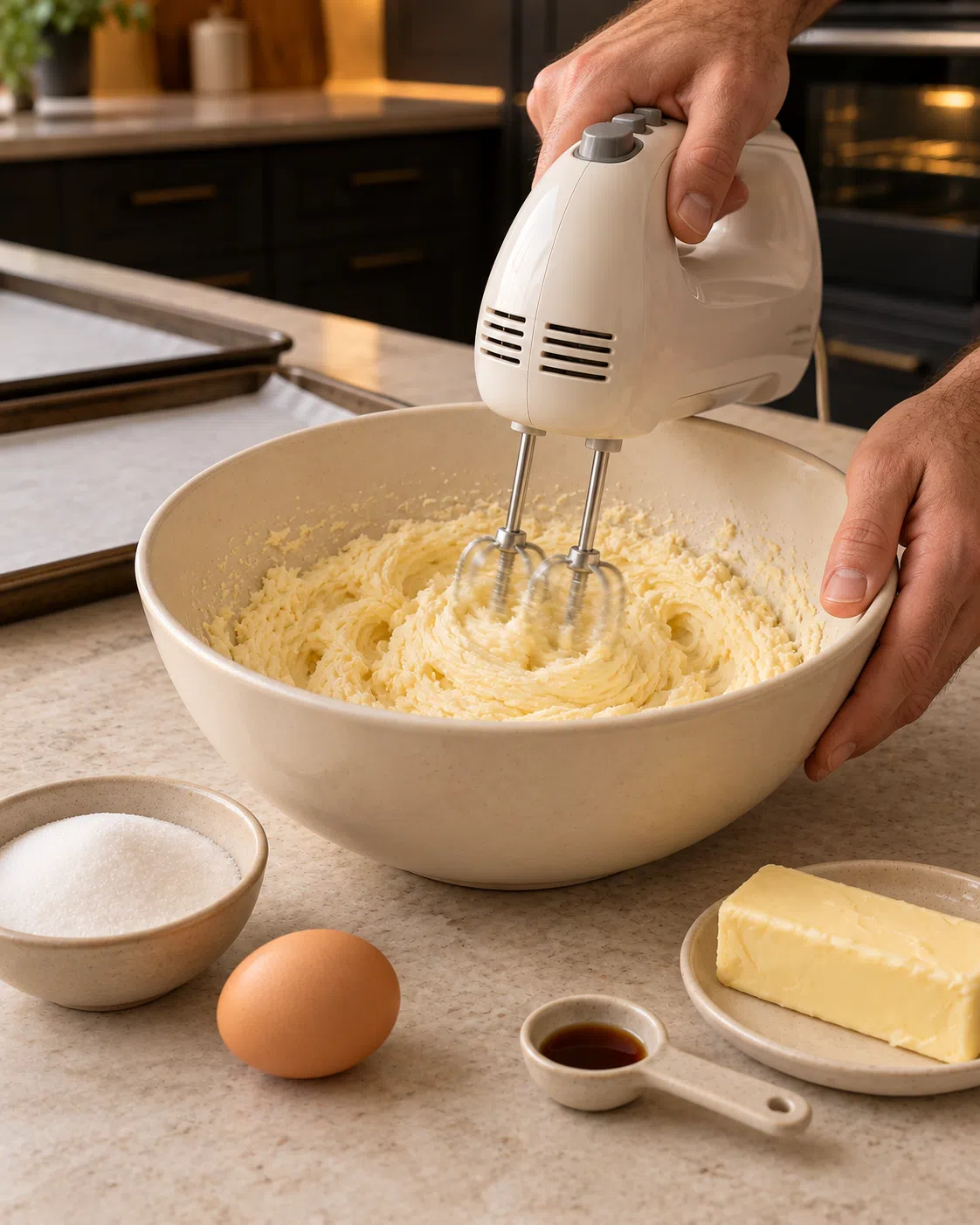
Let the butter sit at room temperature until it dents under a finger but still keeps its shape. Beat it with the granulated allulose for about 2 minutes, until pale and fluffy. Scrape the bowl down once, then beat in the egg and the vanilla until the dough looks like thick beige paste.
Step 2: Add the dry ingredients
Add the almond flour, baking powder, and salt, and beat just until the dough comes together with no loose flour left at the bottom of the bowl. Then stop. Divide the dough into 12 equal portions and roll each one into a smooth ball.
Step 3: Make the filling
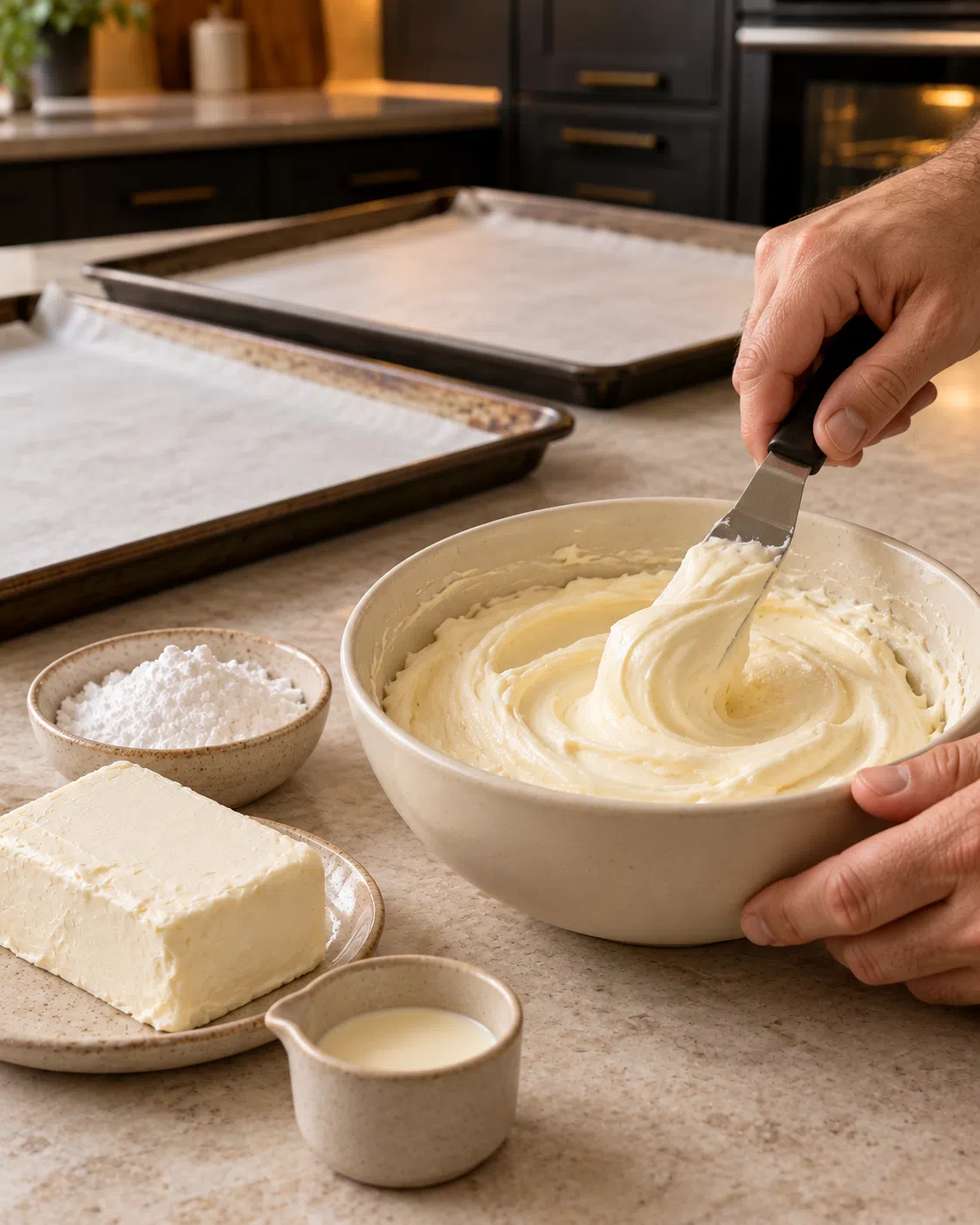
Beat the softened cream cheese with the powdered allulose until smooth, then mix in the heavy cream and the vanilla until it holds together. Cover and refrigerate for 10 minutes, until firm enough to roll but still pliable.
Step 4: Fill, seal, and chill
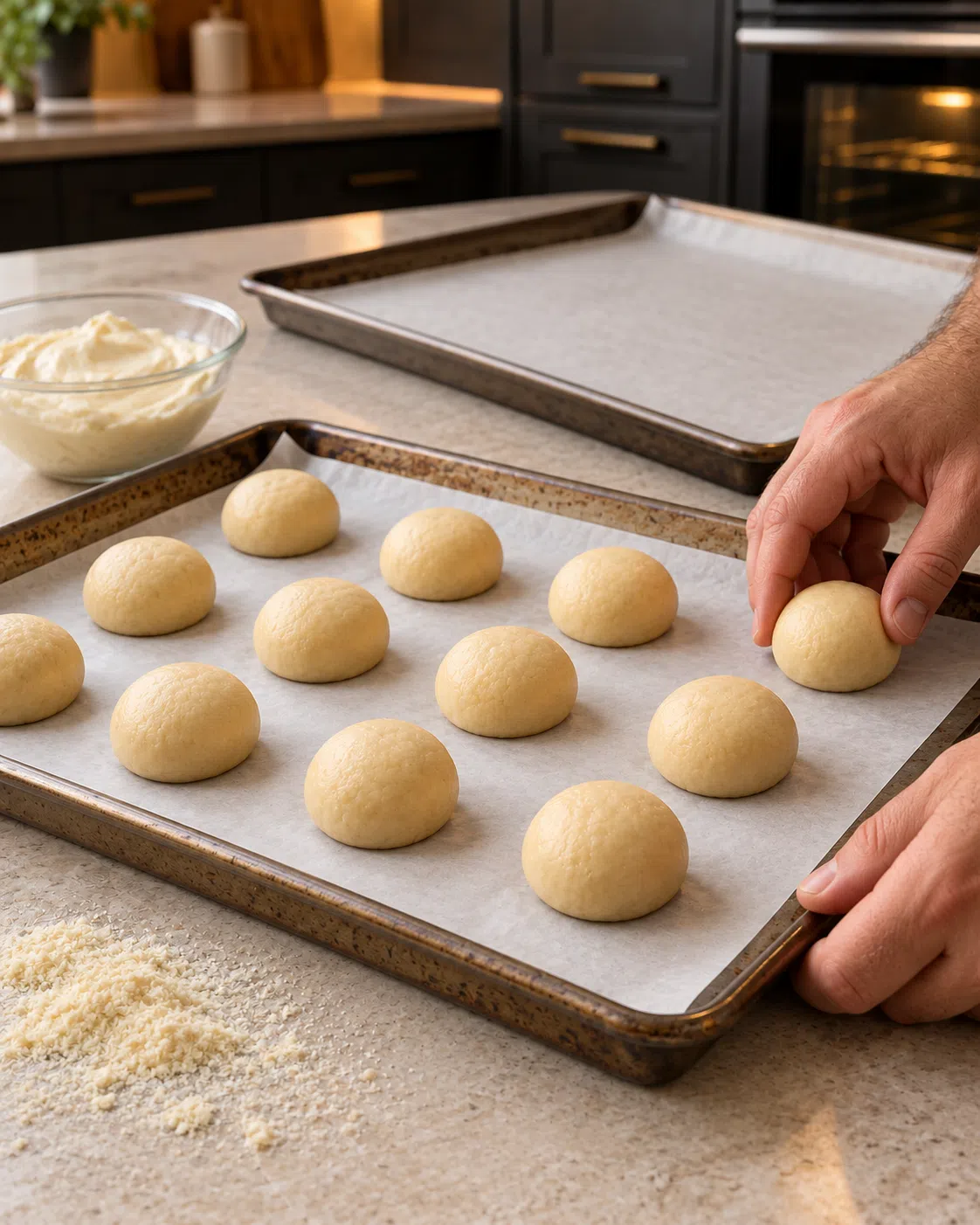
Heat the oven to 325°F and line two large baking sheets with parchment. Flatten a small piece of dough in your palm into a round about 2 inches wide, add a teaspoon of the chilled filling, then pinch the dough closed all the way over the top and roll it into a smooth ball. Repeat with the rest of the dough and filling.
Arrange the dough balls on the baking sheets about 2 inches apart and refrigerate them for 30 minutes. Skipping this chill is the most common reason stuffed cookies come out of the oven already leaking.
Step 5: Bake
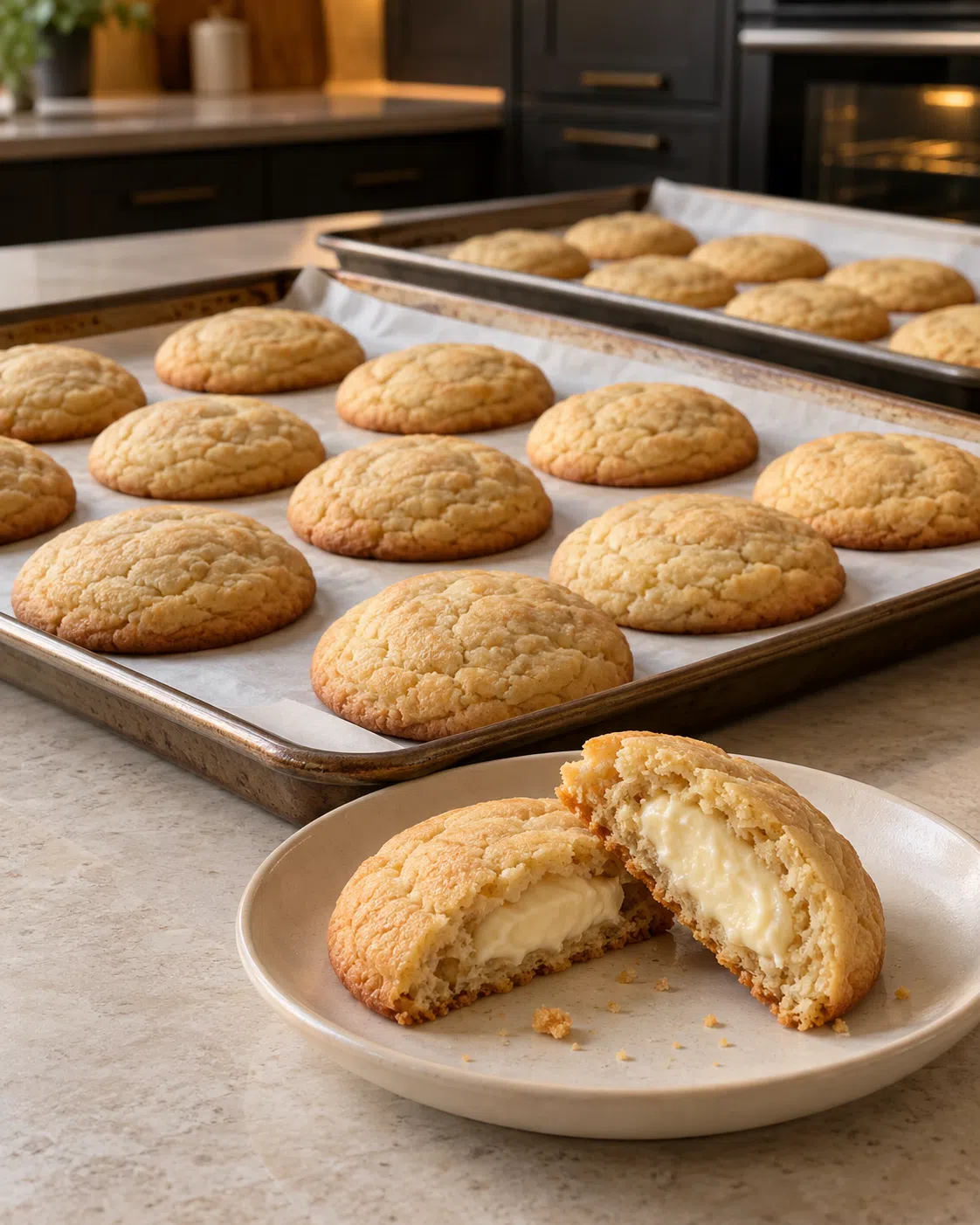
Bake for 11 to 13 minutes, until the edges are set and light golden and the centers still look slightly underdone. Cool the cookies on the pan for 15 minutes before moving them to a wire rack. Moving them sooner is how you lose the bottoms.
Success Tips
- Give the dough balls the full 30 minutes. Cold dough keeps the butter solid long enough for the filling to set in the oven instead of running out.
- Pull the cookies at 11 minutes. The centers will look raw. They finish setting on the pan during the 15-minute cool, which is what keeps them soft and thick.
- Use parchment, not silicone. The butter dough browns from underneath on silicone, so the bottoms go dark well before the centers are done.
- Chill the filling, do not freeze it. Ten minutes is enough to firm it up for rolling. A frozen portion cracks when you try to seal the dough around it.
- Seal the dough completely. Any seam you leave open becomes the spot the filling escapes from, so pinch and then roll the ball smooth.
Storage
Keep the cookies in an airtight container at room temperature for up to 3 days. They are at their best in the first 24 hours, while the center is still soft. For longer storage, refrigerate them in an airtight container for up to a week, though the filling firms up in the cold and the cookies lose some of their softness.
Skip the microwave. Reheating melts the cream cheese filling and dries the dough shell at the same time, and there is no way to get one back without the other. If you want the same tangy filling in a dessert you make ahead, the sugar-free frozen caramel cheesecake bars build theirs on cream cheese and Greek yogurt, bake only the crust, and set in the freezer.
FAQ
Do these cookies actually have a cream cheese filling?
Yes, and it is the reason they are worth the extra steps. Beat together 4 ounces of softened full-fat cream cheese with 3 tablespoons of powdered allulose, a tablespoon of heavy cream, and a teaspoon of vanilla, chill it 10 minutes, then seal about a teaspoon of it inside each of the 12 dough balls. There is no cream cheese mixed into the dough itself, so the filling stays a distinct layer.
Why did my cookies spread flat in the oven?
Three causes, in order of likelihood. The first is skipping the 30-minute chill, which lets the butter soften enough to slump.
The second is butter that was too warm going into the bowl; softened means it dents under a finger and holds its shape, not that it slumps. The third is overworking the dough after the flour goes in, which weakens the structure that was holding it together.
Why did the filling leak out onto the baking sheet?
Almost always one of two things. If the filling was used straight from the mixing bowl, it was too soft to hold its shape inside the dough, so it needs those 10 minutes in the refrigerator first. If the filling was chilled properly, then the seam was not sealed. Pinch the dough closed all the way over the top and roll the ball smooth to remove any opening.
Can I freeze sugar-free cheesecake cookies?
Freeze the dough balls, not the baked cookies. Set them on a tray until solid, then move them to a sealed bag and keep them frozen for up to 30 days, baking straight from frozen with 1 to 2 minutes added to the time.
Baked cookies do not freeze well, because the cream cheese filling turns grainy as it comes back to temperature. If you want a crisp take on the same almond flour and allulose dough, the sugar-free Nutter Butter cookies bake golden shells and sandwich them with a peanut butter and cream cheese filling.
Is there a lighter filling option?
The tang comes from the full-fat cream cheese, so replacing it changes the cookie more than you would expect. If you want a filling that is lighter and does not need baking at all, the sugar-free key lime cheesecake cups set theirs with Greek yogurt and gelatin in the refrigerator, in six individual jars.
Because allulose browns the butter dough without drying it out, the oven temperature is not the hard part of this recipe. The 30-minute chill is.
Get that timing right and you get twelve soft, tangy-centered cookies that are still good on day two. From counter to first bite, sugar-free cheesecake cookies like these take about 40 minutes, and they look the part the whole way through.
Sugar-Free Cheesecake Cookies
Ingredients
Equipment
Method
- Beat the softened butter and the granulated allulose for about 2 minutes, until pale and fluffy. Scrape the bowl down once, then beat in the egg and the vanilla until the dough looks like thick beige paste.
- Add the almond flour, baking powder, and salt, and beat just until the dough comes together with no loose flour left at the bottom of the bowl. Divide into 12 equal portions and roll each into a smooth ball.
- Beat the softened cream cheese with the powdered allulose until smooth, then mix in the heavy cream and the vanilla. Cover and refrigerate for 10 minutes, until firm enough to roll but still pliable.
- Heat the oven to 325°F and line two large baking sheets with parchment. Flatten a small piece of dough in your palm into a round about 2 inches wide, add a teaspoon of the chilled filling, pinch the dough closed all the way over the top, and roll it into a smooth ball. Repeat with the rest of the dough and filling.
- Arrange the dough balls on the baking sheets about 2 inches apart and refrigerate for 30 minutes. Bake for 11 to 13 minutes, until the edges are set and light golden and the centers still look slightly underdone.
- Cool the cookies on the pan for 15 minutes before moving them to a wire rack. Moving them sooner is how you lose the bottoms.