
Almost every dessert on this site asks for caramel at some point, which made it worth having one sauce on hand that does the job every time. This sugar-free caramel sauce takes ten minutes from the stove to a pitcher, and it is the base several of the pies and bars here are built on.
The whole thing rests on one ingredient: allulose. It is the only sugar-free sweetener that genuinely browns, reducing and tasting like caramel rather than like a sweetener that burned, and it does that in about ten minutes in a dry pan.
The trade is speed. Allulose colors far faster than white sugar, so this recipe stops at medium amber rather than dark mahogany. Push it further and the sauce turns bitter quickly, so watch it from the moment the edges start to color.
Why You’ll Love This Sugar-Free Caramel Sauce
- Ten minutes of cooking. 5 minutes of prep, 10 to 14 minutes on the heat and 15 to 20 minutes to cool into a pourable sauce.
- It actually tastes like caramel. Allulose browns and reduces the way sugar does, so you get a real cooked flavor instead of a sweetened cream.
- 0g net carbs. About 32 calories a serving across 12 portions, with 3g fat and no carbohydrate at all.
- Smooth and pourable. The warm cream loosens the caramel and the butter finishes it, so sugar-free caramel sauce comes out with no graininess and no hardened bits.
- Keeps a week. Refrigerated airtight it holds for up to 7 days, which makes it worth doubling.
- One sauce, many desserts. Drizzle, pour or spoon sugar-free caramel sauce over anything that wants caramel.
Ingredient Notes
The sweetener is ½ cup (96g) pure granulated allulose, with 3 tbsp (45g) water. The water is not optional and it is not a shortcut: allulose melts to a higher temperature than sugar, and this small amount of water lets the syrup reach a workable temperature at a gentler heat.
Use granulated, not powdered or syrup-form allulose. Powdered allulose carries anticaking and will not reduce to a clean syrup, while syrup-form allulose arrives with water already in it and will not brown properly, which is the whole point of sugar-free caramel sauce.
½ cup of granulated allulose is also the small number worth knowing about for sugar-free caramel sauce. Unlike white sugar, allulose browns in minutes, so a recipe that asks for a cup of it is asking for a burnt sauce.
The dairy is ¼ cup (60g) heavy whipping cream, gently warmed, and 1 tbsp plus 1 tsp (20g) unsalted butter added in pieces at the end. Cold cream shocks the caramel and makes it seize, and cubed butter melts into the sauce instead of sitting on the surface.
The ⅛ tsp (0.5g) of fine salt is what keeps the caramel from tasting flat. It does not make the sauce taste salty, it just makes the sweetness read as caramel.
When I want to confirm what an ingredient actually contributes, I work from USDA FoodData Central, the reference behind the gram weights in the card below.
How to Make Sugar-Free Caramel Sauce
Measure everything before the heat goes on, cut the butter into small pieces and warm the cream until it is just warm to the touch. You need all three within reach, because from the moment the syrup starts coloring sugar-free caramel sauce moves fast.
Combine the allulose and water in a 1-quart light-colored heavy-bottomed saucepan over medium-low heat and stir until dissolved, which takes a couple of minutes. Light-colored metal matters here, because a dark pan hides the color change you are watching for and sugar-free caramel sauce depends entirely on that color to tell you when to stop.

Let it come to a simmer, then stop stirring continuously and swirl the pan occasionally so the color evens out. Keep it moving or you get hot spots that scorch while the center is still pale.
Cook until the syrup turns golden and drop the heat as the browning starts. Allulose goes from pale to amber in well under a minute at this stage, and the color you want is a medium amber like the sauce in a jar of store-bought caramel, not the dark brown that reads as burnt.

Pull the pan off the heat immediately at medium amber and slowly whisk in the warm cream. The caramel will bubble up hard and spatter if the cream is hot enough to seize it, so pour in a thin steady stream while you keep the whisk moving.
Add the butter in small pieces and whisk until it is completely smooth, then stir in the salt. If any hardened bits stick to the bottom, return the pan to a very low heat for a moment just to dissolve them, then take it off again.

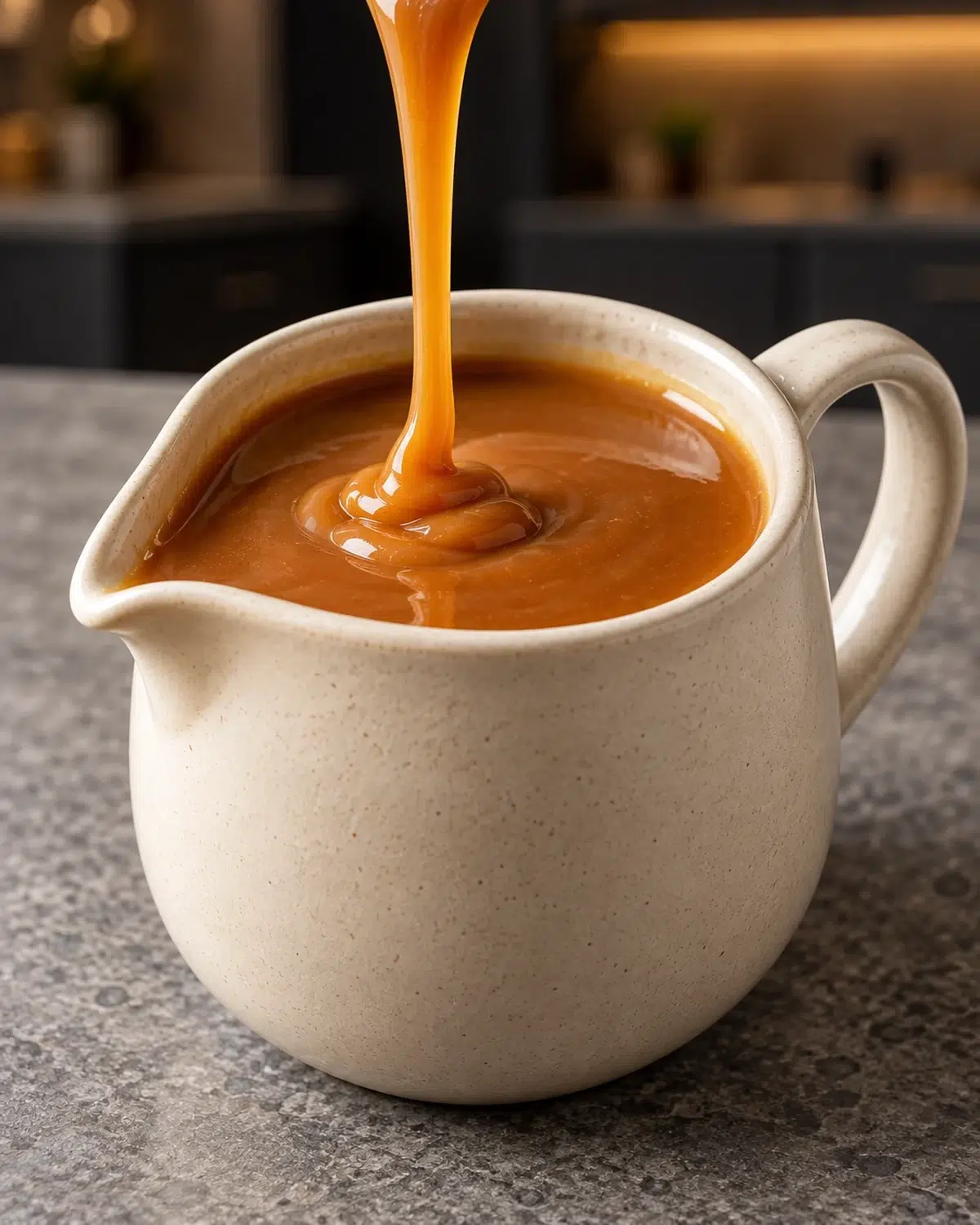
Transfer the finished sauce to a heatproof glass pitcher and let it cool for 15 to 20 minutes. It thickens noticeably as it cools, ending pourable rather than syrupy, and it divides cleanly into 12 equal portions by weight.
Success Tips
Allulose browns quickly, so avoid dark caramel. The window between good amber and bitter brown is roughly thirty seconds at medium heat, which is why this sugar-free caramel sauce wants a light pan and a cook who is already watching it.
Add the cream slowly. Pouring warm cream in one go causes a violent bubble-up that spatters hot caramel across the burner, and whisking continuously while it goes in is what keeps the sauce from seizing into a solid mass.
The sauce thickens as it cools, so judge the consistency in the pitcher rather than in the pan. Straight off the heat sugar-free caramel sauce looks thinner than it will be in fifteen minutes, and reducing it further on the stove is how you end up with a hard, spreadable caramel instead of a pourable one.
Storage
Refrigerate sugar-free caramel sauce airtight for up to 7 days. It firms in the cold, so rewarm it gently before serving rather than microwaving it in one go, which overheats the edges and leaves the middle cold.
Use the same rule when you take it out for a table. A small pitcher sitting in a warm room will loosen over a couple of hours, and that is the natural behavior of a sauce with this much butter in it, not a sign it has gone wrong.
FAQ
Why does this caramel brown so fast?
Because allulose browns at a much faster rate than white sugar. Once the syrup reaches a simmer and the edges begin to color, the change to amber happens in well under a minute, which is why sugar-free caramel sauce goes in at medium-low heat and comes off the heat at medium amber.
Why does the caramel darken after the cream goes in?
Cold dairy dilutes the caramel and knocks the color back, and the sauce darkens again as the cream cooks into it. Warm the cream gently first and sugar-free caramel sauce keeps an even color, which is the whole reason that step comes before the whisk.
How long does the sauce keep?
Up to 7 days refrigerated airtight, rewarmed gently before use. Divide the batch into 12 equal portions by weight rather than eyeballing it, since the sauce is thin enough when warm that a spoon gives you very different amounts.
Can I use a dark saucepan?
You can cook in one, but a light-colored heavy-bottomed 1-quart pan is what the recipe is built around. The color is the only signal you have for when to stop, and a black pan hides the exact moment the syrup passes from pale to amber.
What do I serve it with?
For a pie that has caramel built in already, my sugar-free apple tarte Tatin is a close cousin, and my sugar-free caramel pear pudding is the same sauce used as a base rather than a drizzle.
For a nut topping, my old-fashioned sugar-free pecan pie is exactly what a drizzle like this is for. And for bars, my sugar-free gooey chocolate caramel cake bars use caramel in a layer you can actually see.
Sugar-Free Caramel Sauce (Homemade)
Ingredients
Equipment
Method
- Measure ingredients, cut butter into pieces, and gently warm cream.
- Combine allulose and water in the saucepan over medium-low heat.
- Stir until dissolved, then simmer without stirring continuously. Swirl occasionally.
- Cook until the syrup turns golden, reducing heat as it begins browning.
- Remove immediately when medium amber.
- Slowly whisk in warm cream, taking care as the caramel bubbles vigorously.
- Add butter in small pieces and whisk until completely smooth.
- Stir in salt. If needed, return briefly to very low heat to dissolve hardened bits.
- Transfer to a heatproof pitcher and cool 15–20 minutes until thickened but pourable.
- Divide into 12 equal portions by weight. Refrigerate leftovers.
Notes
- Allulose browns quickly; avoid dark caramel.
- Add warm cream slowly to prevent splattering.
- Sauce thickens as it cools.
- Refrigerate airtight up to 7 days; rewarm gently before serving.