
Coconut belongs in the filling of a custard pie, not only on top of it. That is the whole idea behind this sugar-free coconut custard pie: unsweetened shredded coconut stirred straight into a smooth almond-milk custard, with a little more scattered over the surface so it toasts in the oven. Eight wedges, about 132 calories each, and a full 3 hours of chilling before you cut it.
There is no dairy in the filling at all. Unsweetened almond milk, three eggs, and two tablespoons of heavy cream carry it, which keeps the whole dessert at about 1g net carbs per slice.
That lightness is what makes the coconut in this sugar-free coconut custard pie taste loud instead of sweet. The crust is a short press of almond flour and coconut flour with allulose, so it sweetens and browns without a grain of sugar.
It bakes low and slow in a 6-inch deep pie plate, exactly like a classic custard pie, and it wants the same patience at the end. Forty-five minutes on the counter, then at least 2 hours 15 minutes in the refrigerator, and you get a slice that holds its shape and still moves on the fork. Nothing about this sugar-free coconut custard pie asks for more equipment than a whisk and two bowls.
Why You Will Love This Recipe
- Coconut all the way through: 22g of unsweetened shredded coconut goes into the custard itself, so the flavor is in every bite rather than only on the surface.
- No refined sugar anywhere: The crust and the filling are both sweetened with granulated pure allulose, which browns and sets like sugar.
- Dairy-free filling: Unsweetened almond milk does the work of the cream in a traditional custard, and the calorie count stays low.
- A tall, creamy filling: The deep pie plate gives you a custard that fills the whole dish, not a thin layer in a saucer.
- Only 10 steps: Press, bake, whisk, pour, sprinkle, bake, chill. There is no cooked custard and no water bath.
Ingredient Notes for This Coconut Custard Pie
Use unsweetened almond milk, not Original or Vanilla. The vanilla varieties are sweetened, and they will make this sugar-free coconut custard pie noticeably sweeter than the recipe intends. Blue Diamond Almond Breeze Unsweetened Original is the one named here, and it works because it has almost nothing in it to compete with the coconut.
The allulose appears twice on purpose. The 12g in the crust gives the shell its color and a clean, short finish. The 52g in the filling is what sets the custard and lets the top turn lightly golden.
Allulose is a rare sugar that the FDA allows to be excluded from the total sugars and added sugars declarations on the Nutrition Facts label, which is why the carb count here reads as low.
The shredded coconut is divided, and the split matters. About 22g goes into the custard where it softens and stays tender, and the remaining 8g goes on top where the dry heat of the oven turns it crisp and golden. Put it all on the surface of this sugar-free coconut custard pie and you get a toasted shell with a plain filling underneath.
Buy unsweetened shredded coconut and weigh it if you can. Sweetened coconut carries added sugar in the bag, which defeats the entire point of a sugar-free coconut custard pie, and the volume measure drifts more than most people expect between brands.
If you want to check the nutrition of staples like almond flour, eggs and unsweetened shredded coconut yourself, you can look them up on USDA FoodData Central.
How to Make Sugar-Free Coconut Custard Pie
You need a 6-inch deep pie plate that is at least 2 inches deep, a whisk, a couple of mixing bowls, a rimmed baking sheet, and a strip of foil for the crust edges. Have everything out before the oven goes on, because the custard moves quickly once it is mixed and this sugar-free coconut custard pie does not wait for you.
1. Press and bake the almond-coconut crust
Preheat the oven to 325°F (163°C) and lightly grease the pie plate. Combine the almond flour, coconut flour, melted butter, and the 12g of allulose, then add the cold water gradually until the mixture holds together. Press it into a thin crust across the bottom and about 1⅛ inches up the sides.
Bake for 10 to 12 minutes until lightly golden, then cool for 10 minutes. Press the crust thin and pack it firmly. A thick shell is the single most common reason a coconut custard pie turns out bottom-heavy, and it is the easiest mistake to avoid once you see how little dough this sugar-free coconut custard pie actually needs.
2. Whisk the coconut custard
Gently whisk the eggs, the almond milk, the heavy cream, the 52g of allulose, and the vanilla flavoring together until smooth. Do this without rushing and without beating hard, because excessive air in the bowl becomes bubbles in the finished top.

Stir 22g of the shredded coconut into the custard, then pour it into the cooled crust. Sprinkle the remaining 8g of coconut evenly over the surface before it goes in the oven. That is the topping layer, and it is what you are looking for when you see golden brown instead of pale white on a finished sugar-free coconut custard pie.

3. Bake, cool, and chill
Set the pie plate on a baking sheet and bake for another 35 to 43 minutes, until the edges are set and the center gently wobbles. Shield the crust edges with foil if they brown faster than the custard sets.
Cool at room temperature for 45 minutes, then refrigerate for at least 2 hours 15 minutes until set. Slice into 8 wedges with a thin knife dipped briefly in hot water and wiped clean between cuts. Cutting a warm sugar-free coconut custard pie gives you a wedge that slumps, and no amount of care at the oven will fix that.

Success Tips
- Use a deep 6-inch plate. It is what gives you the tall, creamy filling this sugar-free coconut custard pie is built around.
- Keep the crust thin and firmly packed. Press it with your fingertips rather than rolling it, and check for thin spots along the bottom.
- Watch the topping, not the clock. The coconut should be golden, not burnt, and it goes from golden to dark in a couple of minutes.
- Do not overbake. Chill the pie fully before slicing, and stop the oven while the center still moves.
- Weigh your ingredients. Especially the shredded coconut and the allulose. Volume measures are the least reliable part of this recipe.
One more thing worth knowing: the recipe gives you 3 hours of chill and rest time on purpose, and 45 of those hours are on the counter. Cooling the pie at room temperature before it goes into the refrigerator is a real step, not a formality, because the custard keeps setting as it cools.
Storage
Keep the sugar-free coconut custard pie covered in the refrigerator and cut it only when you are ready to eat. The toasted coconut topping softens as it sits against the custard, so if you want the crisp version, store the pie whole and slice each wedge right before serving.
FAQ
Can I use sweetened almond milk in a sugar-free coconut custard pie?
You can bake with it, but the pie will be sweeter and the carb count will not match the numbers on this page. This recipe uses Blue Diamond Almond Breeze Unsweetened Original Almondmilk for that reason. Any unsweetened variety works as long as it has no added sugar.
How do I keep the coconut topping from burning?
Start checking at about 25 minutes into the second bake, and use foil. If the shreds on the surface of the sugar-free coconut custard pie darken faster than the edges of the custard set, tent the crust edges and lay a loose sheet of foil over the top. Pull the pie the moment the topping is golden rather than waiting for a deeper brown.
Do I really need the baking sheet under the pie?
Use one. A deep pie plate sitting directly on the oven rack bakes unevenly, and the bottom of a custard is the part you cannot check once it is hidden. The baking sheet in the equipment list is there to give the pie a flat, even surface to cook on, and it costs you nothing but a minute of counter space.
Can I make this sugar-free coconut custard pie ahead?
Yes. The recipe already builds in a full cooling and chilling window of 3 hours before the pie is sliced, so baking earlier in the day and cutting it later is simply following the method. Cool it on the counter for 45 minutes first, refrigerate it covered, and leave the whole pie uncut until you are ready to serve.
Why is my coconut custard pie runny in the middle?
There are two causes. The first is underbaking, so check the center at the 35-minute mark of the second bake.
The second is slicing before it has chilled all the way, which is why the recipe lists 3 hours of chill and rest time. A sugar-free coconut custard pie should wobble in the oven and hold its shape in the fridge.
If you want a coconut dessert that never touches the oven, our easy strawberry coconut fluff builds the same creamy base from Greek yogurt, cream cheese, and whipped cream, then crowns it with whole berries and unsweetened coconut. For a baked custard with a different finish, our sugar-free crème brûlée custard pie uses the same thin almond crust and adds a torched top.
Toasted coconut earns its keep in plenty of other places too, like the top layer of our sugar-free seven-layer bars and the creamy coconut filling in our sugar-free cinnamon-vanilla creamy custard pie. Whichever you make next, weigh the shredded coconut and keep the oven at 325°F. Both details are doing more work than you would think.
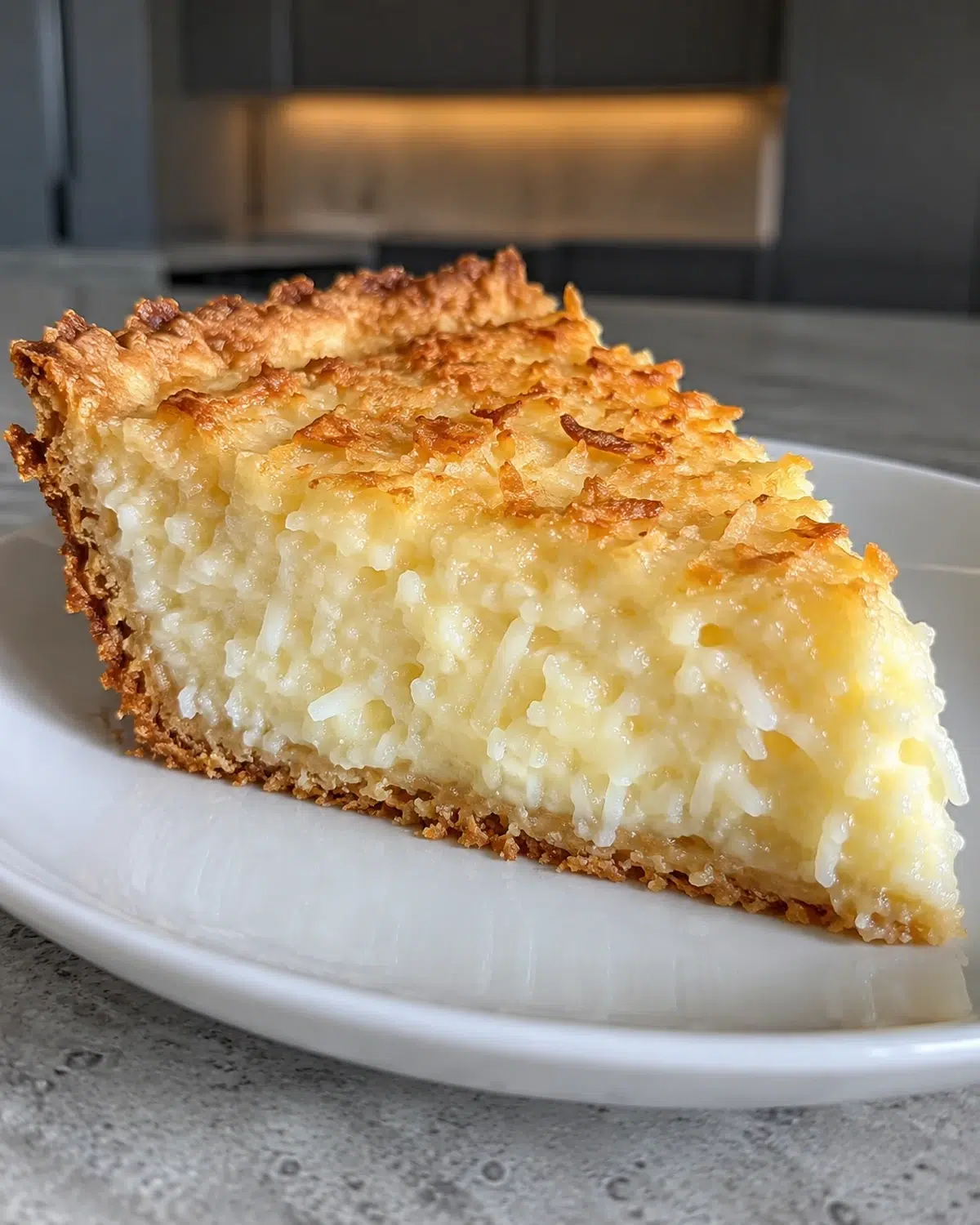
Sugar-Free Coconut Custard Pie
Ingredients
Equipment
Method
- Preheat oven to 325°F (163°C). Lightly grease the pie plate.
- Combine almond flour, coconut flour, butter and 12g allulose. Add cold water gradually until mixture holds together.
- Press into a thin crust across the bottom and about 1⅛ inches up the sides.
- Bake 10–12 minutes until lightly golden. Cool 10 minutes.
- Gently whisk eggs, almond milk, cream, 52g allulose and vanilla until smooth without adding excessive air.
- Stir 22g shredded coconut into the custard.
- Pour into the crust. Sprinkle remaining 8g coconut evenly over the surface.
- Place on a baking sheet. Bake another 35–43 minutes until edges are set and center gently wobbles. Shield crust edges with foil if needed.
- Cool at room temperature for 45 minutes.
- Refrigerate at least 2 hrs 15 min until set. Slice into 8 wedges.
Notes
- Use a deep 6-inch plate for a tall, creamy filling.
- Keep the crust thin and firmly packed.
- Coconut topping should be golden, not burnt.
- Avoid overbaking; chill fully before slicing.
- Weigh ingredients for consistent results.